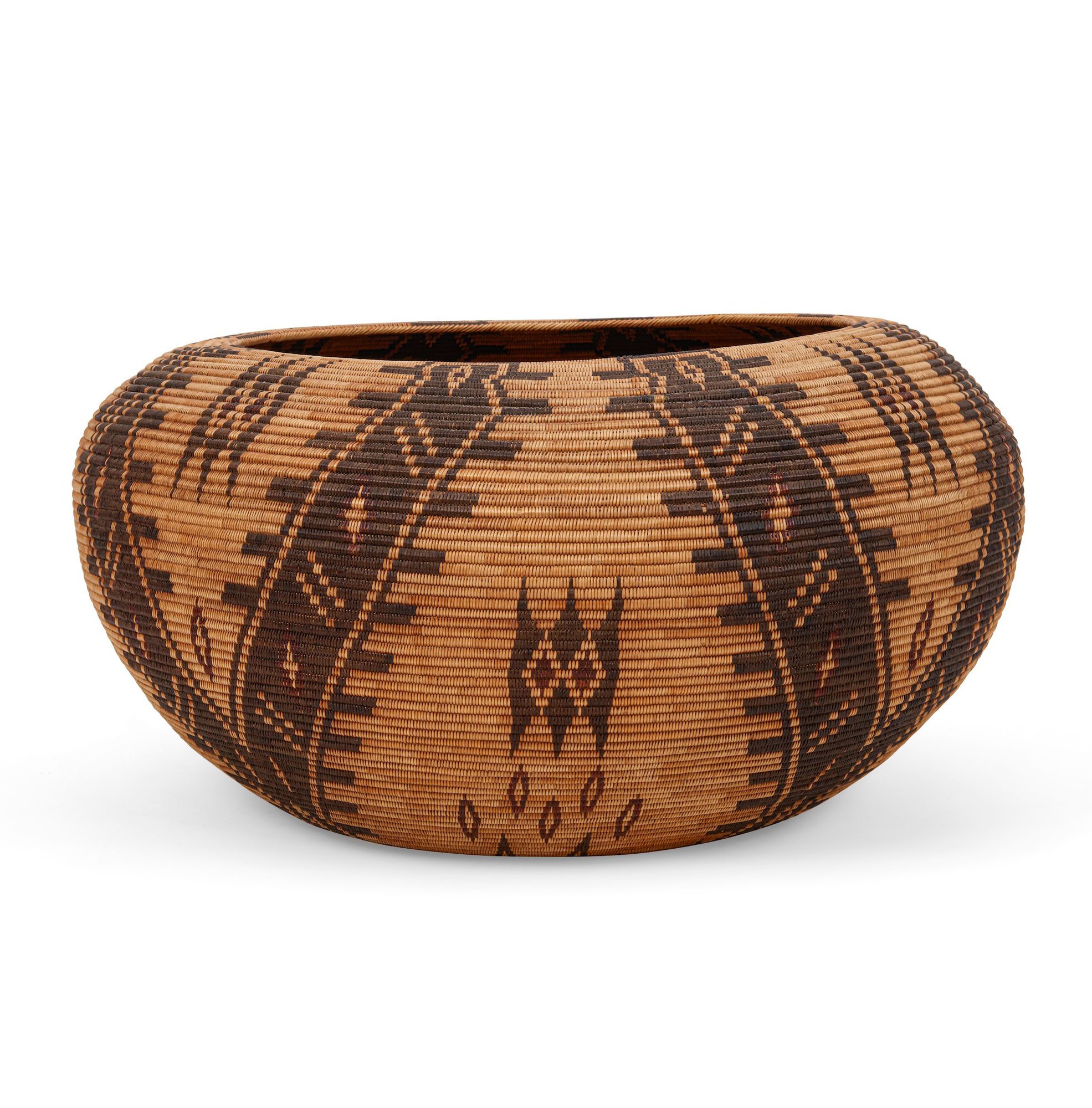
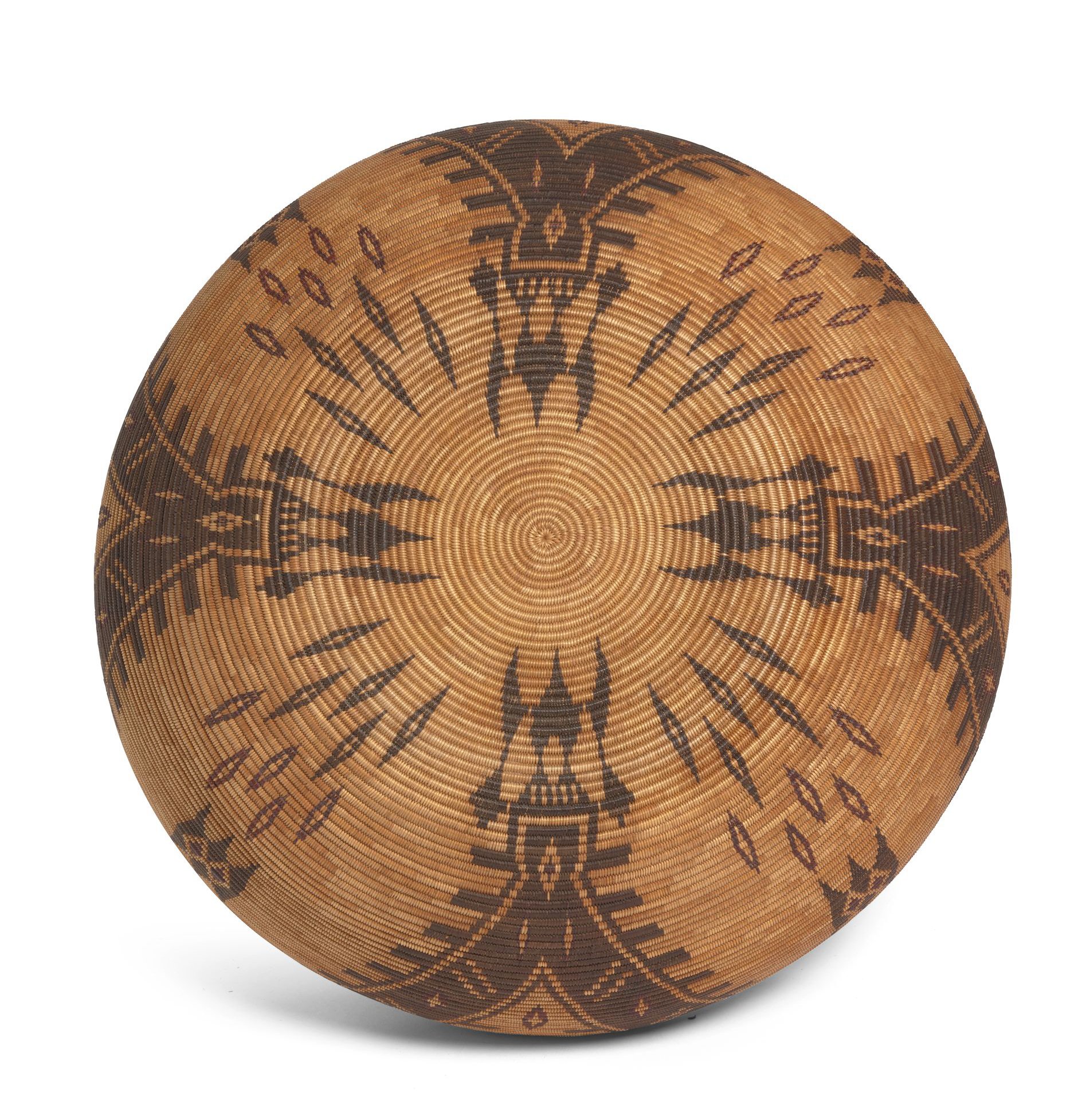
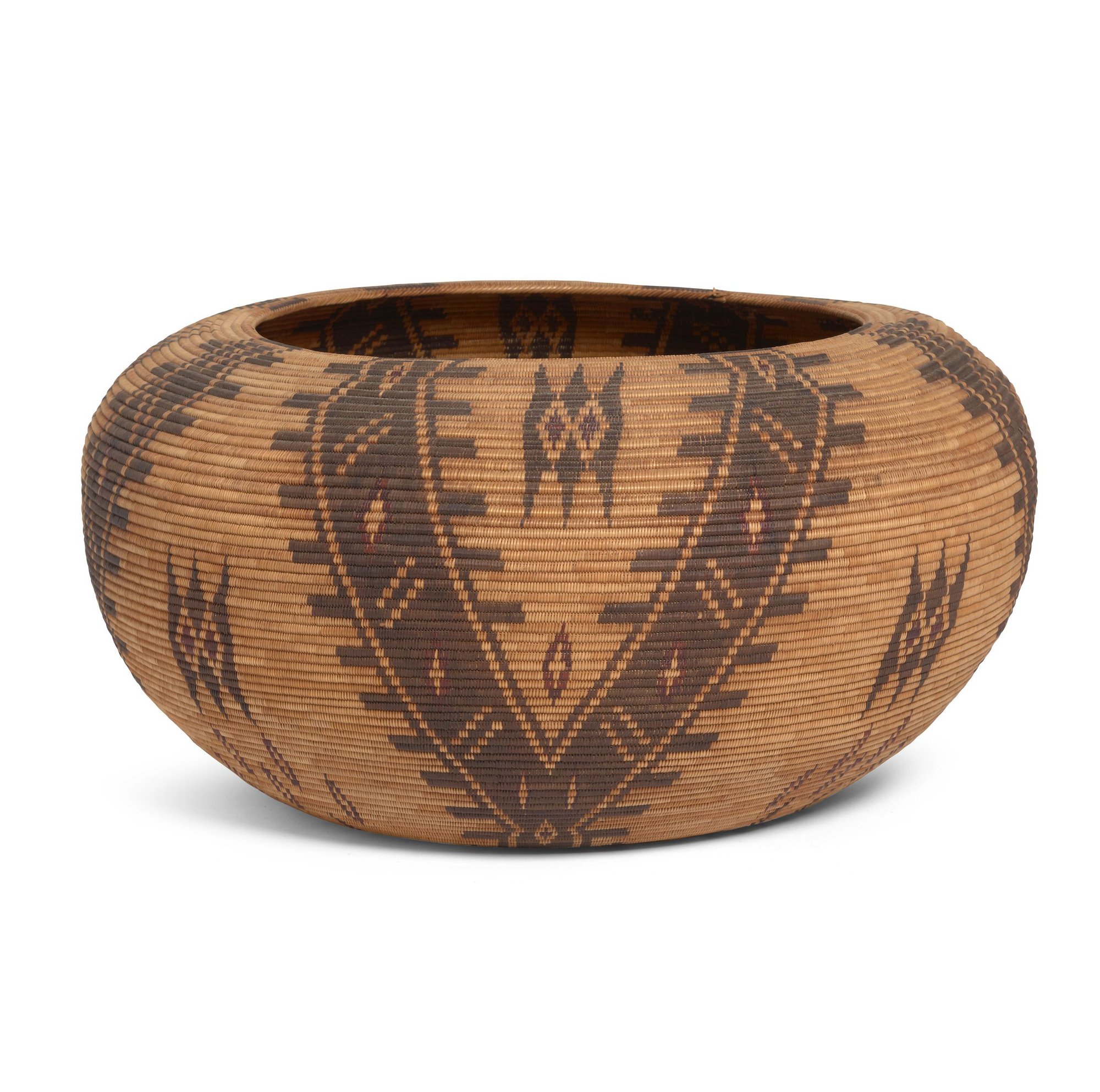
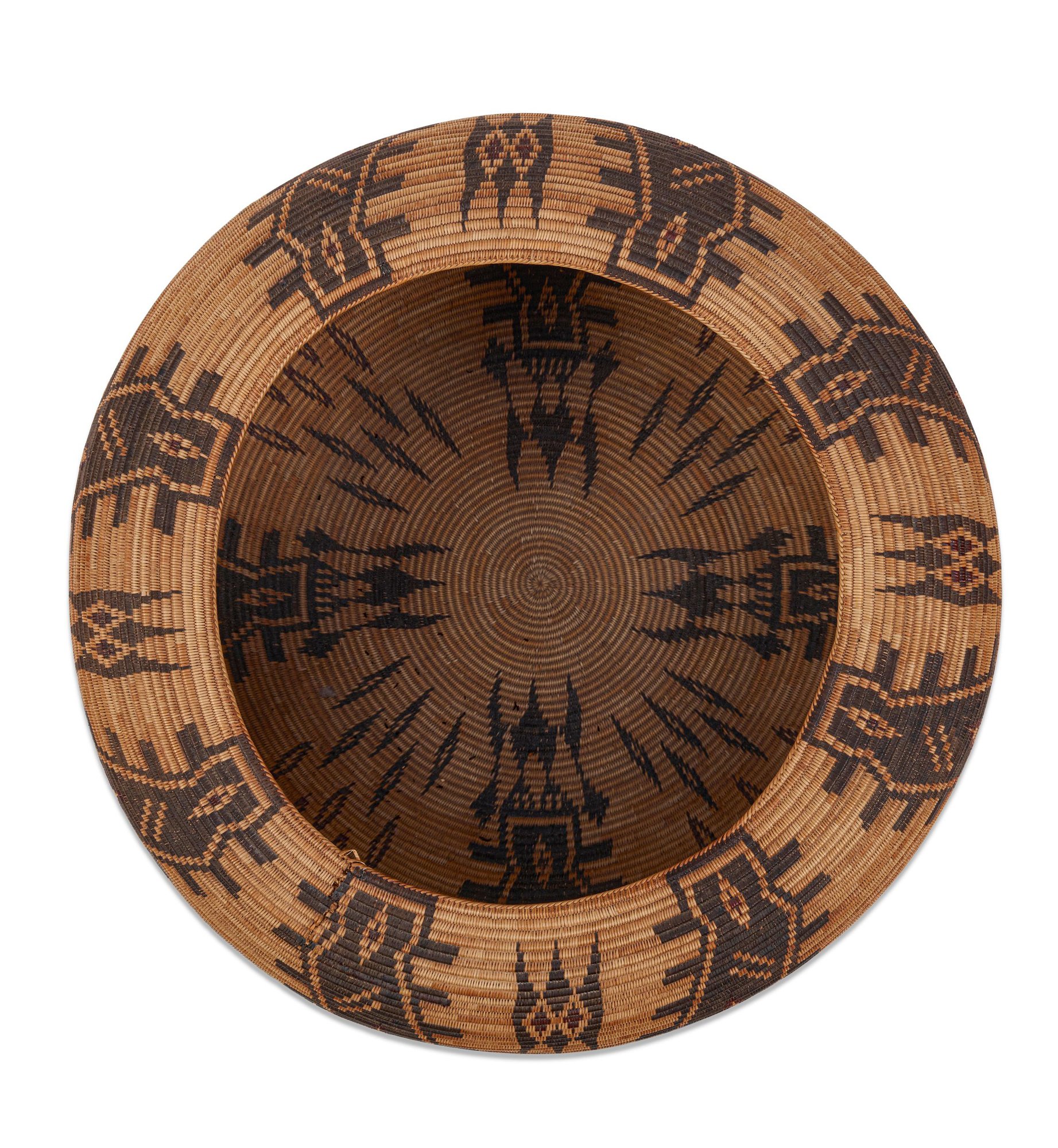
JTM-198479
panier Kootzaduka'a
Californie
Provenance
- Carrie Bethel
- Edward J. & Mimi Nusrala, St. Louis
- 9 déc. 2025, Bonhams — Native American Art
Résultat des ventes
Publications
See Haas, Jim, and Lindbergs, Ingmars, The Ella Cain Collection of Mono Lake Paiute Basketry, 2005, Bonhams & Butterfields, San Francisco, CA, pp.28-29 for a period photo of the June Lake Field Day event picturing Carrie Bethel holding the present lot. Seen far left, she is pictured alongside other prize-winning weavers and their works. On p.28 the back of the same photo is shown, inscribed by Ella Cain with the following text: "1st prize Carrie McGowan - basket bought by Mrs. Frank Oswald, 120 - 47th St, Los Angeles Calif." Additional photos from the event are pictured on pp.15 and 32. Enlarged copies of these images, along with several other views taken at the same June Lake Field Days event accompany the lot.
Garfinkel, Alan P., editor, California Indian Basketry; Ikons of the Florescence, 2021, Sunbelt Publications, San Diego, CA, p.96, figs.149 and 150. "Carrie Bethel (née McGowan) was born in Lee Vining, California, on July 4, 1898. She spent most of her childhood near Bodie in the Mono Basin. She learned to weave as a child, often discarding inferior baskets. Her sister, Minnie Mike, also became an important weaver. By the 1920s, Carrie was a master weaver, often competing in the June Lake and Yosemite Indian Field Days. A number of photographs of Carrie at these events have been widely circulated." Ibid. p.89
For a history of the June Lake Field Days, see Bates, Craig, Tradition and Innovation: A Basket History of the Indians of the Yosemite-Mono Lake Area, 1990, The Yosemite Association, Yosemite, CA, p.111: "Between 1927 and 1930 at least two June Lake Field Days, celebrations modeled after the Yosemite Indian Field Days, were held south of Mono Lake. The events, likely staged to encourage tourism in that region, included basketry and beadwork contests and an Indian baby competition. Many weavers who regularly competed at Yosemite’s Indian Field Days also entered their work in the June Lake event, including Leanna Tom, Maggie Howard, Tina Charlie, Nellie Jameson Washington and Carrie Bethel. A number of baskets evident in photographs taken at the June Lake Field Days also appeared in the 1929 Yosemite Indian Field Days. The Indian Field Days inspired Yosemite-area weavers to develop a creative style of basketry that blended native and non-native aesthetics. The event brought weavers and buyers together, presenting individual weavers as artists. Weavers could rely upon basket sales for a major portion of their annual incomes and sales thrived as visitors purchased baskets as souvenirs of a visit to Yosemite; baskets provided not only a tangible link to Native Americans, but also to the national park. Weavers were encouraged more than ever before to experiment with new, non-native designs, and these unrestrained motifs were combined with technological refinements to traditional methods of basket production to create new works of art, unencumbered by traditional ideas of design."
Expositions
- Heard Museum, Phoenix, AZ, David Hockney’s Yosemite and Masters of California Basketry, October 28, 2019 - June 28, 2020
Included with the lot is a framed poster for the Museum exhibition featuring the basket, along with a copy of the Museum’s membership magazine, earth song, with the same image pictured on the back cover and illustrating an article about the exhibition.
- The St. Louis Art Museum, St. Louis, MO, Southwestern Native American Art, June 11, 2021 – February 20, 2022